When device performance needs improvement, or users are requesting new features, many teams default to hardware upgrades.
But developers for some of the world’s biggest IoT products—like Apple, Tesla, and Amazon—show that strategic software updates often deliver better results at a fraction of the cost and at scale.
Finding new ways to use existing sensors, for example, not only negates the need for expensive new sensors: it also means faster product updates, accessible across existing devices, which means happier users and more value from existing inventory.
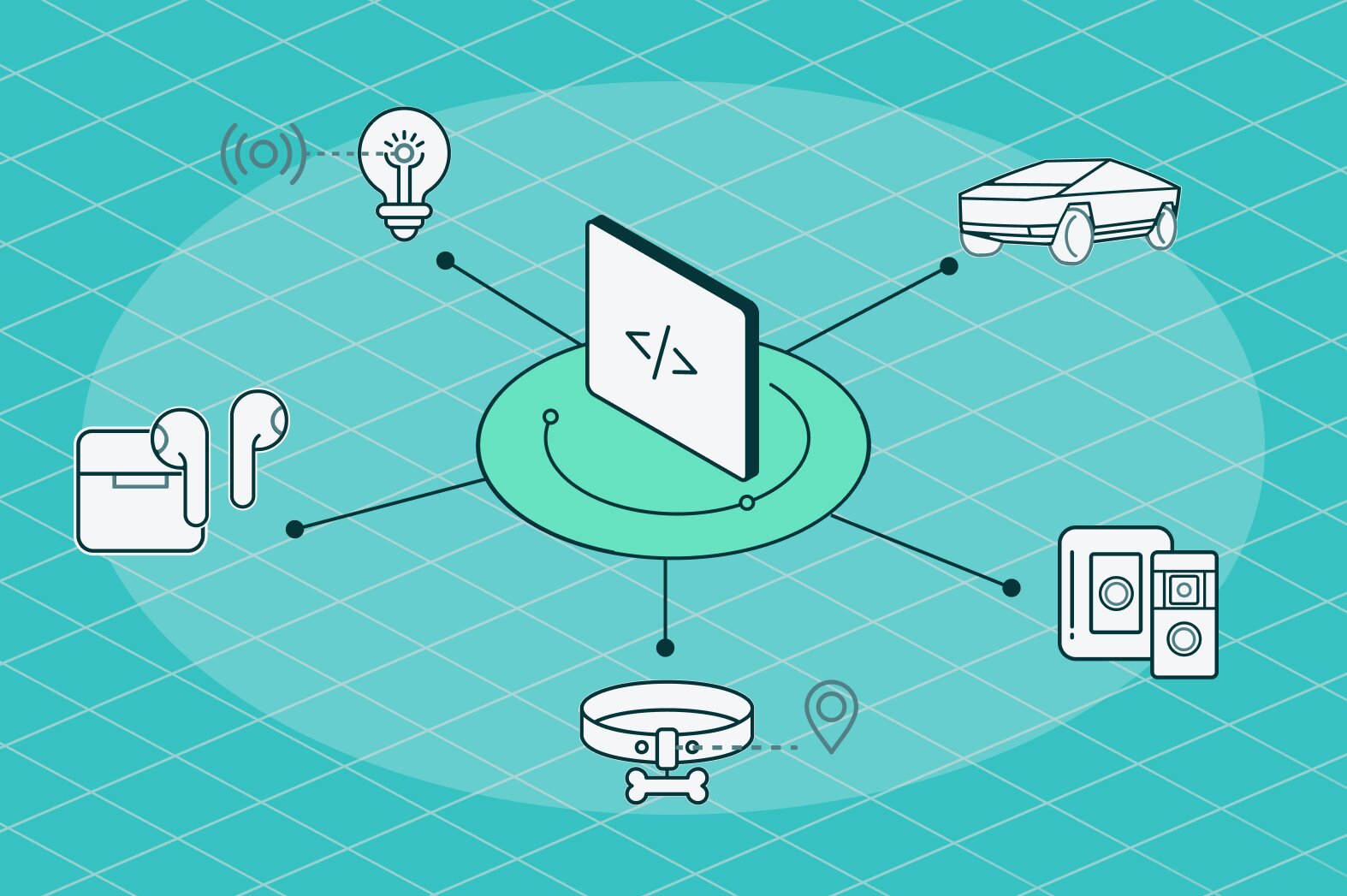
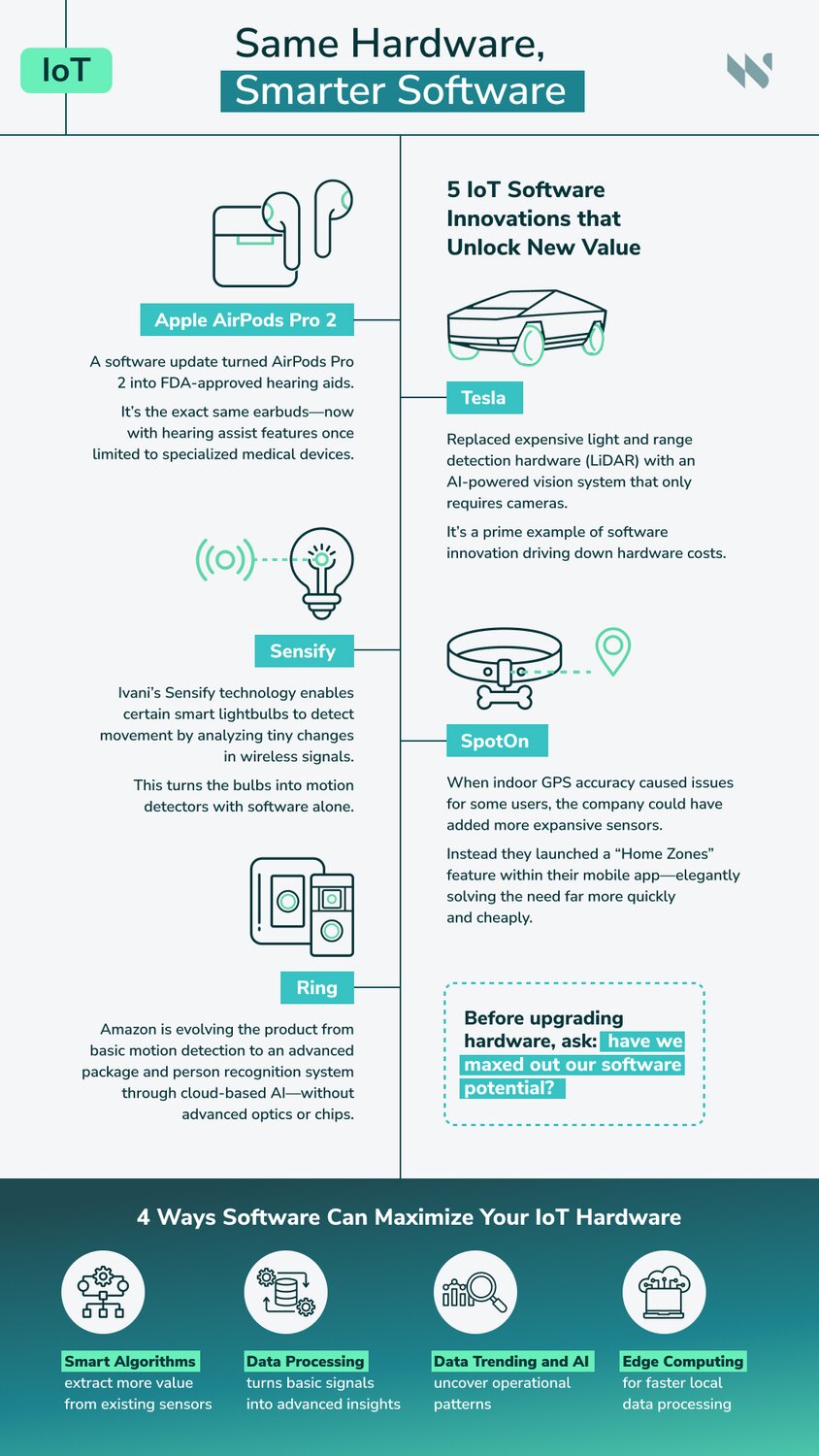
For example, Apple turned its AirPods Pro 2 into FDA-approved hearing aids with a software update which applied hearing assist features once limited to specialized medical devices.
Meanwhile, Tesla replaced expensive light and range detection hardware (LiDAR) with an AI-powered vision system that only requires existing cameras, driving down hardware costs.
Check out our infographic for 5 examples of this trend we love (including our own work with SpotOn), along with 4 top tips for how to maximize your IoT hardware:
For more IoT insights, find out how we developed an award-winning GPS dog collar and virtual fence with SpotOn and our work on a healthtech wearable that drives better patient outcomes with revolutionary ID-monitoring software.
You can also read our guide to engineering offline-resilient IoT applications, turning the challenge of disconnection into an opportunity for enhanced functionality, along with our top 6 UX principles for creating great IoT apps.